

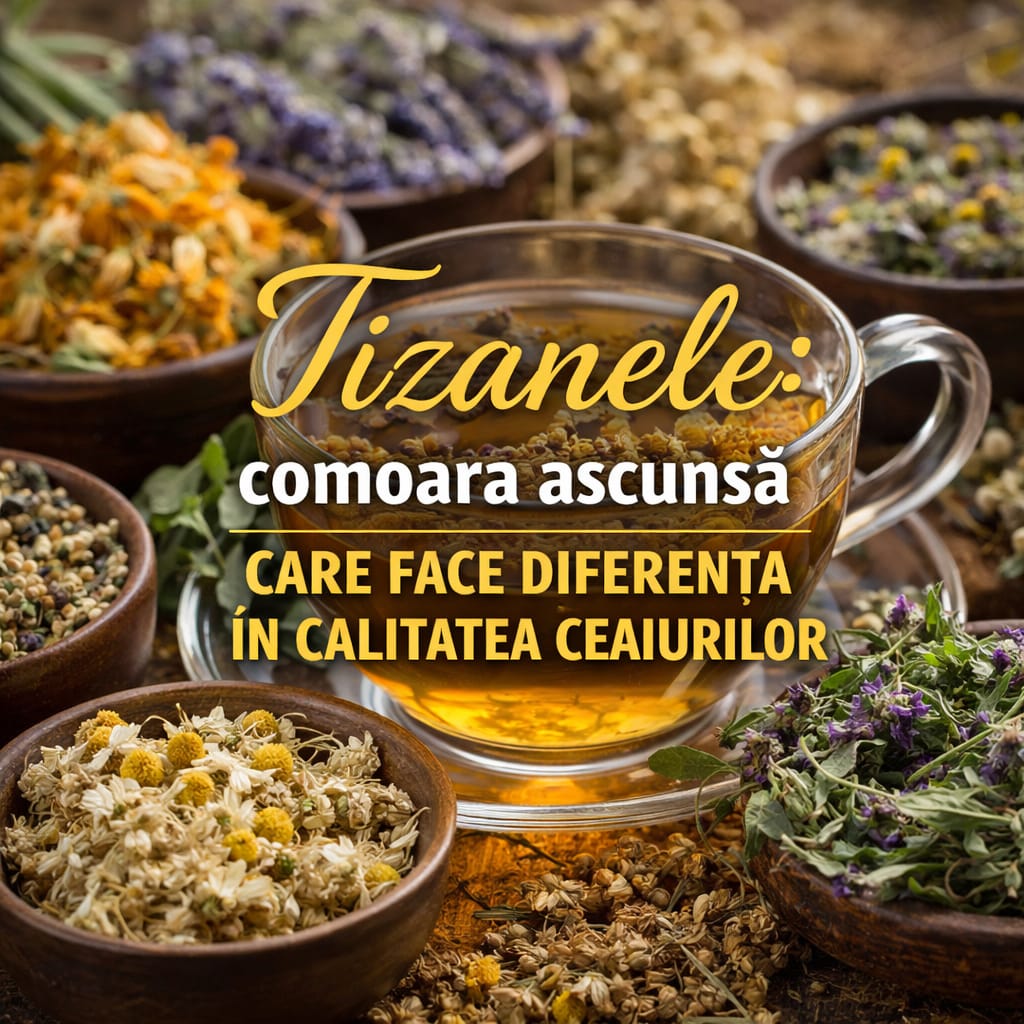
Piața ceaiurilor este, în mare parte, o piață a compromisului. Majoritatea produselor disponibile sunt rezultatul unor procese industriale: plante tocate, fragmentate, uneori reduse aproape la praf. Un produs uniform, stabil, ușor de ambalat – dar sărac în identitate.
În termeni simpli: mult „fân”, puțină plantă.
Ce oferă piața
materie primă fragmentată, standardizată
pierdere de uleiuri volatile prin procesare agresivă
aspect tern, fără structură recognoscibilă
gust plat, previzibil
Ce a oferit ferma Capra Roșie în 2025
plante întregi: frunze, flori, tulpini păstrate în forma lor naturală
uscare lentă, la umbră – conservarea principiilor active
integritate vizuală: vezi planta, o recunoști
profil aromatic complex, viu
Diferența nu este una de marketing, ci una biologică și senzorială. O plantă întreagă își păstrează structura celulară, iar odată cu ea, compușii activi și aromele volatile. În momentul infuzării, eliberarea este treptată, completă, coerentă.
În schimb, o plantă tocată excesiv pierde exact ceea ce o face valoroasă.
Experiența consumatorului
Cei care au încercat tizanele de la Capra Roșie nu au avut nevoie de explicații tehnice. Diferența s-a simțit imediat:
infuzie clară, aromată, fără gust de „uscat”
senzația de prospețime, nu de material inert
revenirea către produs – cel mai clar indicator de calitate
Nu întâmplător, mulți dintre cei care au gustat s-au întors. Nu pentru că au fost convinși, ci pentru că au recunoscut diferența.
Concluzie
2025 nu a fost doar un an bun pentru ceaiuri. A fost anul în care s-a văzut clar ruptura dintre două abordări: industrial vs autentic.
Ferma Capra Roșie nu a vândut plante tocate. Nu a vândut volum. A oferit plante întregi, vii, recognoscibile – exact așa cum ar trebui să fie un ceai adevărat.
Capra Roșie vs the Tea Market: The Difference Between “Hay” and Living Plants
The tea market is, to a large extent, a market of compromise. Most available products are the result of industrial processing: chopped, fragmented plants, sometimes reduced almost to dust. A uniform, stable product, easy to package – but poor in identity.
In simple terms: a lot of “hay”, very little plant.
What the market offers
fragmented, standardized raw material
loss of volatile oils due to aggressive processing
dull appearance, no recognizable structure
flat, predictable taste
What Capra Roșie Farm offered in 2025
whole plants: leaves, flowers, stems preserved in their natural form
slow, shade drying – preserving active compounds
visual integrity: you see the plant, you recognize it
complex, vibrant aromatic profile
The difference is not one of marketing, but of biology and sensory experience. A whole plant preserves its cellular structure, and with it, its active compounds and volatile aromas. During infusion, release is gradual, complete, and coherent.
By contrast, heavily chopped plants lose precisely what makes them valuable.
Consumer experience
Those who tried Capra Roșie herbal infusions needed no technical explanation. The difference was immediate:
clear, aromatic infusion, without a “dry” taste
a sense of freshness, not inert material
repeat purchase – the clearest indicator of quality
Many returned. Not because they were persuaded, but because they recognized the difference.
Conclusion
2025 was not just a good year for tea. It was the year that clearly exposed the divide between two approaches: industrial vs authentic.
Capra Roșie did not sell chopped plants. It did not sell volume. It offered whole, living, recognizable plants – exactly what a real herbal infusion should be.
Capra Roșie vs. der Teemarkt: Der Unterschied zwischen „Heu“ und lebenden Pflanzen
Der Teemarkt ist größtenteils ein Markt der Kompromisse. Die meisten verfügbaren Produkte sind das Ergebnis industrieller Verarbeitung: zerkleinerte, fragmentierte Pflanzen, manchmal fast zu Staub reduziert. Ein einheitliches, stabiles Produkt, leicht zu verpacken – aber arm an Identität.
Einfach gesagt: viel „Heu“, wenig Pflanze.
Was der Markt bietet
fragmentiertes, standardisiertes Rohmaterial
Verlust flüchtiger Öle durch aggressive Verarbeitung
stumpfes Aussehen, keine erkennbare Struktur
flacher, vorhersehbarer Geschmack
Was der Hof Capra Roșie im Jahr 2025 angeboten hat
ganze Pflanzen: Blätter, Blüten und Stängel in ihrer natürlichen Form erhalten
langsame Trocknung im Schatten – Erhalt der Wirkstoffe
visuelle Integrität: man sieht und erkennt die Pflanze
komplexes, lebendiges Aromaprofil
Der Unterschied ist kein Marketing, sondern Biologie und sensorische Realität. Eine ganze Pflanze bewahrt ihre Zellstruktur und damit ihre Wirkstoffe und flüchtigen Aromen. Bei der Infusion erfolgt die Freisetzung langsam, vollständig und harmonisch.
Im Gegensatz dazu verlieren stark zerkleinerte Pflanzen genau das, was sie wertvoll macht.
Kundenerfahrung
Wer die Kräutertees von Capra Roșie probiert hat, brauchte keine technischen Erklärungen. Der Unterschied war sofort spürbar:
klare, aromatische Infusion ohne „trockenen“ Geschmack
Frischegefühl statt inertes Material
Wiederkauf – der deutlichste Qualitätsindikator
Viele kamen zurück. Nicht, weil sie überzeugt wurden, sondern weil sie den Unterschied erkannt haben.
Fazit
2025 war nicht nur ein gutes Jahr für Tee. Es war das Jahr, in dem sich der Unterschied zwischen zwei Ansätzen klar gezeigt hat: industriell vs. authentisch.
Capra Roșie hat keine zerkleinerten Pflanzen verkauft. Es ging nicht um Menge. Angeboten wurden ganze, lebendige, erkennbare Pflanzen – genau so, wie ein echter Kräutertee sein sollte.
Leave a Reply